

Transit Dependence Is Becoming Kazakhstan’s Main Economic Risk – Alona Lebedieva

Alona Lebedieva
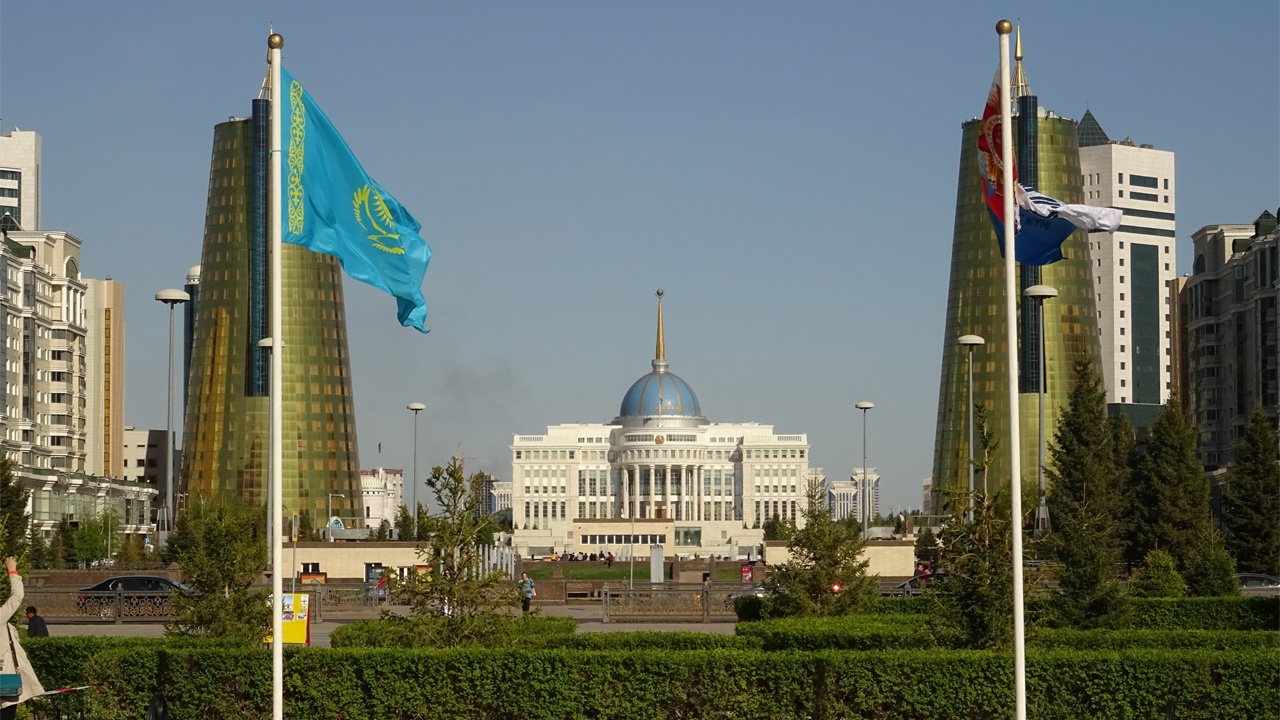
Astana, Kazakhstan
During one of these episodes, Kazakhstan’s daily production of oil and gas condensate more than halved – from an average of 2.16 million barrels in June to approximately 1 million barrels. According to Alona Lebedieva, owner of the Ukrainian industrial and investment group Aurum Group, this exposed a fundamental problem in Kazakhstan’s economy: the country is investing in expanding production faster than it is developing independent export routes.
The First Conclusion – High Production Does Not Mean Energy Independence
More than 80% of Kazakhstan’s oil exports are transported through the Caspian Pipeline Consortium. The system connects oil fields in the western part of the country with a marine terminal near Novorossiysk. Therefore, technical failures, regulatory decisions or security issues on Russian territory directly affect Kazakhstan’s ability to supply oil to the global market.
During the July shutdown, companies were forced to reduce production to prevent storage facilities from overflowing. At the Tengiz field, operated by a consortium led by the US company Chevron, production at one point fell from approximately 925,000 to 406,000 barrels per day.
For Kazakhstan, such disruptions have economy-wide implications. In the first months of 2026, crude oil and petroleum products accounted for approximately 44% of the country’s total merchandise exports. No other sector is currently capable of quickly compensating for a significant reduction in oil supplies.
At the same time, Kazakhstan continues to expand its production capacity. In 2025, the country exported approximately 78.7 million tonnes of oil, more than 82% of which was transported through the CPC. The expansion of the Tengiz field provided the main increase. Therefore, the growth in production did not reduce dependence on a single route but, on the contrary, intensified it.
The Second Conclusion – Kazakhstan’s Risks Are Becoming Risks for International Investors
Chevron, ExxonMobil, Eni, Shell, TotalEnergies and other global companies operate at Kazakhstan’s largest oil fields. Chevron owns a 50% stake in the Tengizchevroil consortium, while Kazakhstan, according to estimates by the Kazakh side, accounts for approximately one-quarter of the US company’s total production.
The stability of the CPC is therefore important not only for Kazakhstan’s state budget. It directly affects the production performance, profits and investment decisions of international energy corporations.
For Russia, the consequences of disruptions are mixed. The suspension of the route results in lost dividends and tax revenues, as well as reduced utilisation of infrastructure in Novorossiysk. Russia’s Transneft owns a 24% stake in the CPC, while other Russian entities also hold shares in the consortium.
At the same time, a reduction in supplies of Kazakh oil decreases the overall supply on the global market. This may support prices and strengthen demand for Russian oil in India, China and Türkiye. Therefore, the suspension of the CPC should not be viewed exclusively as an economic blow to Russia – it creates both losses and potential market advantages for Moscow.
The Third Conclusion – Alternatives Exist, but They Are Insufficient
Kazakhstan is already developing a route across the Caspian Sea and through the Baku–Tbilisi–Ceyhan pipeline. In 2025, approximately 1.2 million tonnes of Kazakh oil were transported through this route. In 2026, the country planned to increase this volume to 2.2 million tonnes.
However, even after this expansion, the route will remain several dozen times smaller than the CPC. The main limitation is not only the pipeline’s capacity but also the transportation of oil from Kazakhstan to Azerbaijan. This requires tankers, modernised ports and stable trans-Caspian logistics.
The port of Kuryk is capable of handling approximately 200,000 barrels per day, while under normal operating conditions the CPC transports more than 1 million barrels of Kazakh oil daily. The situation is further complicated by a shortage of tankers, insufficient port infrastructure and the shallowing of the Caspian Sea, whose level has fallen by approximately 2.5 metres over the past three decades.
According to Alona Lebedieva, Kazakhstan’s problem is not the absence of alternative routes but their insufficient scale. Routes through China, Azerbaijan, Germany or Baltic Sea ports can accommodate individual shipments of oil but are unable to replace the CPC quickly. Moreover, some of them also pass through Russian territory and therefore do not provide full geopolitical diversification.
In theory, Kazakhstan could build an underwater oil pipeline across the Caspian Sea to Azerbaijan. However, such a project would require significant investment, complex interstate and environmental approvals, and would take at least several years to complete.
The realistic objective is therefore not to abandon the CPC completely, as it will remain the most economically advantageous route for a long time, but to create a backup system. Such a system should allow the country to continue exporting without a sharp reduction in production even if one route is suspended.
To achieve this, investment in new oil fields must be accompanied by comparable investment in ports, a tanker fleet, storage facilities, pipelines and international transport agreements.
Alona Lebedieva emphasises that the events of July have changed the very understanding of Kazakhstan’s energy independence. The country’s main constraint may not be a shortage of oil, but a shortage of routes that it is able to control. The speed at which alternative logistics are developed will determine whether production growth translates into long-term economic strengthening or merely deepens dependence on a single transit corridor.
Alona Lebedieva
Aurum Group
email us here
Legal Disclaimer:
EIN Presswire provides this news content "as is" without warranty of any kind. We do not accept any responsibility or liability for the accuracy, content, images, videos, licenses, completeness, legality, or reliability of the information contained in this article. If you have any complaints or copyright issues related to this article, kindly contact the author above.
